
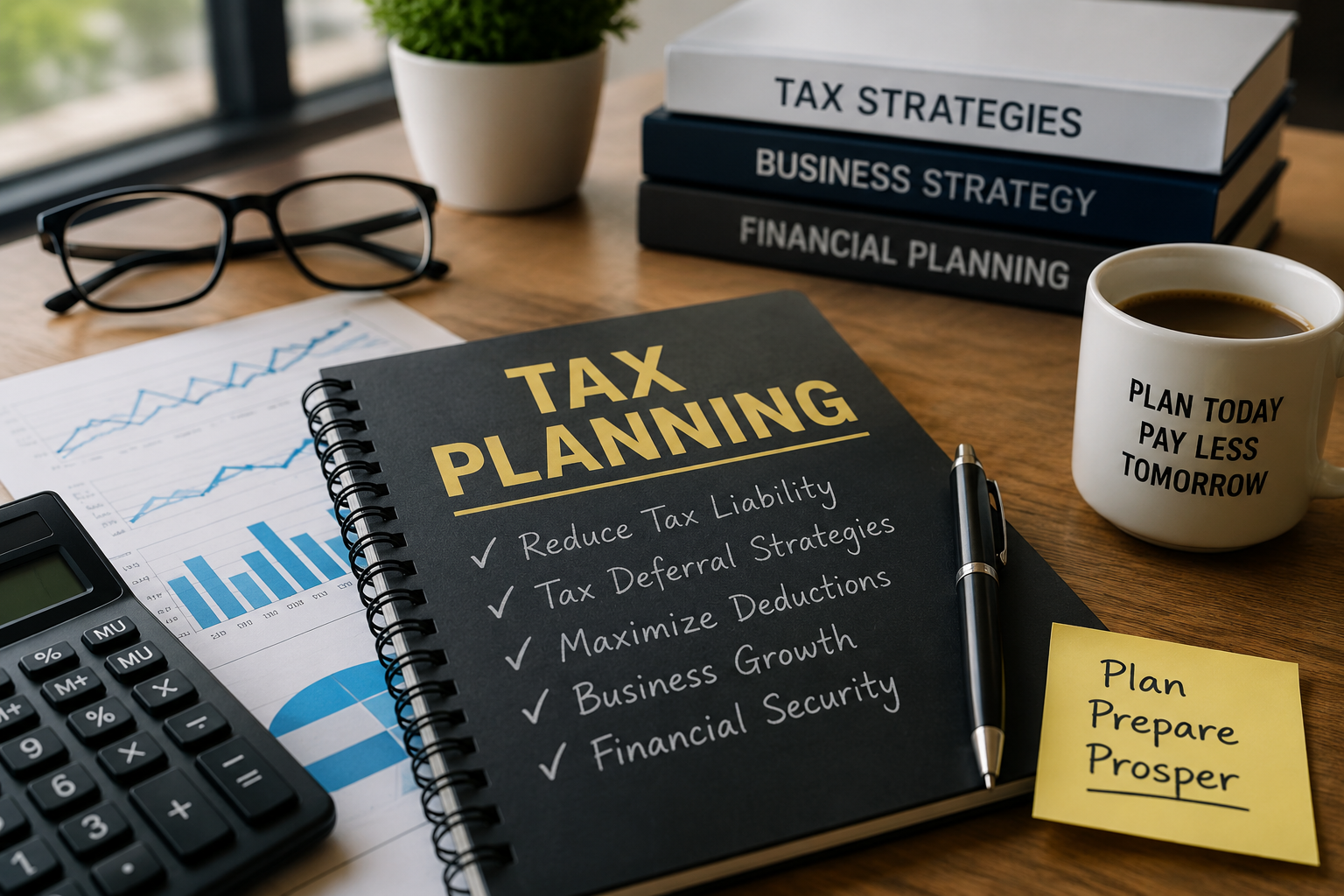

If your CPA Isn’t Talking to You About Tax Planning, You Should Be Asking Why
For successful business owners, proactive tax planning shouldn’t be an extra service you consider when there is time. It should be a fundamental part of your relationship with your CPA.
If your business is growing, your income is increasing, and your tax situation is becoming more complex, simply preparing an accurate tax return once a year isn’t enough. You need a plan!
Tax Preparation and Tax Planning Are Not The Same Thing
Tax preparation shows you what happened—how your business performed, what you earned and spent, and what that means for your taxes. But by the time the return is complete, the year is over and many opportunities have passed.
Tax planning looks at what could happen. It considers where your business stands today, projects where you may end up, and gives you time to ask: Can we make it better?
That could mean reducing or deferring taxes, changing the timing of a purchase or business decision, or taking advantage of a strategy you hadn’t considered. Sometimes the best decision is to leave things alone.
That’s the value of planning: you’re making decisions while there is still time to influence the outcome.
Every Growing Business Owner Should Have a Tax Plan
As your business becomes more successful, your tax situation generally becomes more complicated. That’s when tax planning becomes increasingly important.
You should understand your projected tax liability before your return is prepared, know whether legitimate opportunities exist to reduce or defer taxes, and understand how major business decisions could affect your tax position.
Your strategy may involve income and expense timing, owner compensation, retirement plans, capital expenditures, depreciation, entity structure, investments, charitable giving, estate planning, or eventually the sale or transition of your business.
Not every strategy makes sense for every business owner. Sometimes paying tax today is better than deferring it.
The goal isn’t simply to find deductions. It’s to develop a comprehensive tax strategy around your business, income, future plans, and available opportunities.
For many successful business owners, tax deferral can be an important part of that strategy. The key is that there should be a plan.
Your CPA Should Be Reaching Out to You
Business owners should have higher expectations from their CPA.
You shouldn’t have to remember in September to call your accountant and ask whether there is anything you can do before year-end. Your CPA should be initiating that conversation. They know when tax planning needs to happen, which decisions have deadlines, and when opportunities may disappear.
A tax planning meeting doesn’t need to be complicated. It starts with understanding what has happened so far this year:
- How is the business performing?
- Have revenues or profits changed significantly?
- Have you made—or are you planning—major purchases?
- Has your personal financial situation changed?
- Are major transactions coming?
- What do the next few years look like?
From there, your CPA can project your tax situation and identify areas that deserve further discussion. That is what proactive tax service looks like.
Don’t Wait Until Year-End to Tell Your CPA What’s Happening
Your CPA needs to communicate proactively, but you also need to keep them informed. Some decisions shouldn’t wait for an annual tax planning meeting.
If you’re considering selling your company, adding a partner, acquiring another business, expanding into another state, purchasing real estate, making a significant investment, or completing another major transaction, call your CPA before you do it.
Don’t call afterward and ask what the tax consequences are. The structure or timing of a transaction can dramatically affect its tax treatment. Once the transaction is completed, your CPA may have far fewer options. A five-minute call before signing something can lead to a very different conversation than a call after it has already been signed.
Tax Planning Isn’t About Avoiding Taxes
Good tax planning isn’t about finding tricks or loopholes so you never pay taxes. Successful businesses make money, and making money generally means paying taxes.
The objective is to pay the taxes you’re legally required to pay while taking advantage of appropriate planning opportunities.
And sometimes the best strategy means paying tax sooner. If you expect your tax rate to be significantly higher in the future, automatically deferring every dollar of income may not produce the best long-term result.
That’s why tax planning needs to go beyond:
“How can I lower my tax bill this year?”
The better question is:
“How do we create the best long-term tax outcome based on where my business and I are going?”
That requires looking beyond a single tax return.
Is Your CPA Planning With You?
If you own a growing, profitable business, you should expect more from your CPA than an accurate tax return.
As your business grows, your tax situation becomes more complex. There is more income to consider, more decisions being made, and potentially more opportunities to plan. Your CPA should understand your business, know what you’re trying to accomplish, and have proactive conversations with you throughout the year.
You shouldn’t consistently be learning what you owe after the year is over and wondering whether something could have been done differently. If that isn’t happening, it may be time to ask whether your current CPA relationship has kept pace with your business.
At Apex CPAs & Consultants, we believe tax planning should be an ongoing part of working with successful business owners not a conversation that begins after December 31.
If you’re not getting that level of planning today, let’s talk. Contact Rik Klotzbach at Apex CPAs & Consultants to start the conversation.